

The Crucible Act 4 Quotes
I'll go over the about of import quotes from The Crucible, explaining both their literal meaning and why they're important. For clarity, the quotes are grouped into four themes: irony, fearfulness and hysteria, pride and reputation, and power and authorisation. Each section also includes additional quotes that autumn under the same general theme for y'all to do analyzing on your own. Many of the Crucible quotes autumn into the category of "dramatic irony", which is the irony that's created when there'southward a mismatch between what a character thinks or says and what the audience knows to be true. Information technology's hardly surprising there is and so much irony in The Crucible – after all, ane of the central causes of conflict in the play is hypocrisy. With that in heed, here are some fundamental quotes from The Crucible that demonstrate irony of some kind. "Nosotros cannot look to superstition in this. The Devil is precise; the marks of his presence are definite equally stone, and I must tell you all that I shall non continue unless you are prepared to believe me if I should find no bruise of Hell upon her." (Unhurt, Human action i, p. 35) The irony, of grade, is that the "marks" of the Devil are nowhere near "definite every bit stone" – the only evidence to support accusations of witchcraft are the subjective experiences of the "afflicted." Even in cases when the girls display symptoms (going cold and clammy or having needles stuck in them), there's never any physical evidence directly linking the defendant witches to their supposed crimes. "ABIGAIL: Don't lie! To Hale: She comes to me while I sleep; she's always making me dream corruptions!" (Deed 1, p. 41) Abigail yelling "don't prevarication" at another person is highly ironic, non only because Miller introduced her equally a liar (she has "an endless chapters for dissembling"), but because Abigail had just told Proctor Betty's affliction was nothing to do with witchcraft not 20 page previously. "I cannot speak but I am doubted, every moment judged for lies, as though I come into a court when I come into this firm!" (Proctor, Act 2 p. 52) "PROCTOR: Considering it speaks deceit, and I am honest! But I'll plead no more! I see now your spirit twists around the single mistake of my life, and I will never tear it free!" (Deed two, p. 59) This pair of quotes both demonstrate the ironic concept: as far as the audience understands it, the only person who seems to exist judging Proctor is not Elizabeth, but Proctor himself. There's also a bit of foreshadowing with "as though I come into a courtroom", since in Deed 3 Proctor will do that very thing. "No man may longer incertitude the powers of the dark are gathered in monstrous assault up on this village. There is also much evidence now to deny it" (Hale, Act 2, p. 61). The village is certainly under assail, merely not necessarily in the mode Hale thinks it is. The existent "powers of dark" affecting Salem are suspicion and fear, not anything demonic. "I am a minister of the Lord, and I cartel not have a life without there be a proof so immaculate no slightest qualm of censor may uncertainty information technology" (Unhurt, Act iii, p. 92). Again, the "proof so immaculate" that Hale speaks of is the give-and-take of one person against the word of some other. As nosotros'll see in a quote by Danforth later on in this article, the proof only remains beyond reproach if you believe in witchcraft more than you believe that people are fallible. There'south likewise foreshadowing in this quote because past the stop of this deed, Unhurt is full of qualms, and past the end of the play, Hale feels he has "blood on [his] caput" (p. 121). "But God fabricated my face up; yous cannot want to tear my confront. Envy is a deadly sin, Mary" (Abigail, Human action three, p. 106) Abigail'southward words hither are ironic because in The Crucible, information technology is Abigail who is envious of the position Elizabeth Proctor has as John Proctor'southward wife. "DANFORTH, conciliatory: You misunderstand, sir; I cannot pardon these when twelve are already hanged for the same offense. It is non but." (Act 4, p. 119). The irony in Danforth'south statement is that it wasn't "just" to hang any of the accused witches in the starting time place, and and so continuing to hang people but because it's already been done before is a terrible idea. At present that y'all've seen a few ironic quotes analyzed and explained, it's your plow! Beneath you'll find several quotes that demonstrate irony (dramatic or otherwise). Try your hand at explaining why each one is ironic and analyzing the difference between what the character mean when she said the quote and the hidden meaning. The second major theme in The Crucible (and ane that teachers often ask about) is fright and hysteria. The fear caused past the idea of supernatural evil in Salem causes the characters in the play to turn a blind eye to logic and instead believe in claims non backed by actual "hard as rock" proof. Below are a few Crucible quotes that relate to this theme. "There is a misty plot afoot so subtle we should be criminal to cling to old respects and ancient friendships. I have seen likewise many frightful proofs in court - the Devil is alive in Salem, and we cartel not quail to follow wherever the accusing finger points!" (Hale, Human action 2, p. 68) Hale demonstrates perfectly the mindset of the characters affected by the hysteria and fear. In his case, it's more hysteria than fearfulness – he doesn't particularly fear that he may be accused every bit a witch, but he has been persuaded by the "frightful proofs" he's seen and this has blinded him to any other possible reasons that the witchcraft accusations might exist existence made. "Why practice you lot never wonder if Parris be innocent, or Abigail? Is the accuser always holy now? Were they born this morning time as clean as God'south fingers? I'll tell you what's walking Salem - vengeance is walking Salem. We are what we always were in Salem, only at present the trivial crazy children are jangling the keys of the kingdom, and common vengeance writes the constabulary!" (Proctor, Act ii, p. 73) Proctor is the voice of common sense here, as a counterpoint to Unhurt's "don't question the process" stance. Unlike Hale, Proctor realizes that you lot can only trust in accusations as much as y'all tin can trust the accuser, and Proctor has crusade to suspect that at least one of the accusations is being driven by a thirst for vengeance. This quote likewise fits a little bit under the "Power/Authorisation" theme – the witchcraft trials have turned the world upside down, so that those who used to be powerless ("the little crazy children") are the ones in ability ("are jangling the keys of the kingdom"). "I never had no wife that be so taken with books, and I thought to find the crusade of it, d'y'meet, just it were no witch I blamed her for. He is openly weeping. I have broke charity with the woman, I have broke clemency with her. He covers his face, ashamed. (Giles, Act 3, p. 79) This quote shows how even Giles Corey, 1 of the more than level-headed characters in The Crucible, got caught up in the hysteria of the witch trials and got his wife accused of being a witch. One could make the argument that Giles didn't intentionally accuse his wife of witchcraft and that he simply wanted to ask the witchcraft expert nigh his wife'southward strange behavior, that's all. If that was the case, though, this quote shows how even those not taken in by the hysterical claims or fear can still be affected by it. "In an ordinary crime, how does one defend the defendant? Ane calls up witnesses to prove his innocence. But witchcraft is ipso facto, on its face and by its nature, an invisible crime, is it non? Therefore, who may possibly be witness to information technology? The witch and the victim. None other. Now we cannot hope the witch will charge herself; granted? Therefore, we must rely upon her victims—and they exercise testify, the children certainly exercise evidence. As for the witches, none will deny that nosotros are most eager for all their confessions. Therefore, what is left for a lawyer to bring out? I think I have fabricated my bespeak. Have I not?" (Danforth, Act 3, p. 93) In this quote, Danforth shows the terrible result of the logical extension of belief in witchcraft. Of course, the part he leaves out in his discussion is whether or non the victims are trustworthy – just considering "they do testify" doesn't mean that they're testifying truthfully – but this is a blind spot for Danforth. It's possible that Danforth cannot fathom that women or children would prevarication to him (a gauge!) because of societal preconceptions; only his opinion is also influenced, at to the lowest degree to some extent, past the fearfulness of witchcraft that pervades Puritan society. I recollect I have fabricated my point. Have I not? Here are a couple of other quotes that demonstrate fear/hysteria. Try your manus at explaining how each of them does so. "ABIGAIL, in a temper: My name is skilful in the village! I will not accept it said my proper noun is soiled! Goody Proctor is a gossiping liar!" (Act 1, p. 12) Abigail is concerned about her reputation and her "proper name;" this is no uncertainty what motivates her, at to the lowest degree initially, to put the blame for the dancing in the woods on Tituba. If her name is "soiled," Abigail could face harsh consequences in the Salem theocracy where women are already depression on the totem pole – if information technology'southward discovered that she, an single orphan woman, slept with a husband, she would confront huge consequences (although what these consequences would be aren't specified in the play). "At present Hell and Heaven grapple on our backs, and all our onetime pretense is ripped abroad—make your peace!…Peace. It is a providence, and no keen change; we are only what we always were, merely naked now. He walks as though toward a great horror, facing the open sky. Yes, naked! And the wind, God's icy current of air, will blow!" (Proctor, Act 2, p. 76). Here, Proctor is anticipating the loss of his reputation in one case it comes to light that he has had an affair with Abigail. Information technology'll mean the loss of his good name, but on the other hand, it'll be a manner for him to atone for his sins – perhaps he'll at last experience "God'south icy wind" and be able to put this behind him. "I came into this village like a bridegroom to his beloved, bearing gifts of high religion; the very crowns of holy law I brought, and what I touched with my bright confidence, it died; and where I turned the centre of my peachy faith, blood flowed up. Beware, Goody Proctor—cleave to no organized religion when religion brings blood. It is mistaken constabulary that leads you lot to sacrifice. Life, woman, life is God's virtually precious gift; no principle, however glorious, may justify the taking of it. I beg you lot, adult female, prevail upon your husband to confess. Let him give his lie. Quail not before God's judgment in this, for information technology may well be God damns a liar less than he that throws his life abroad for pride." (Hale, Act 4, p. 122) Unhurt is describing how he came in full of pride in himself and abilities, only to have that pride result in the deaths of others. He warns Elizabeth that nothing, not even i's pride or reputation, is worth throwing one's life away on. "PROCTOR, with a cry of his whole soul: Because it is my proper noun! Because I cannot have another in my life! Because I lie and sign myself to lies! Because I am non worth the dust on the anxiety of them that hang! How may I live without my proper noun? I have given yous my soul; go out me my name!" (Proctor, Act 4, p. 133). Proctor's self-worth is entirely tied upwardly in "his proper noun" and how others perceive him. He manages to make himself confess and signs the confession, merely when the court officials endeavor to accept the confession away to bear witness to the whole town, that is the sticking indicate. Proctor cannot bear to have his reputation be smeared with this confession of witchcraft, considering if his reputation is damaged then he no longer can remember well of himself. Hither are few more quotes that show the business organization of Salem residents with reputation and the pride they take in their names. As an do to deepen your agreement of the book, endeavor to explain how each one demonstrates concern about proper name, reputation, or pride. The final major theme is that of the ability of society and potency in Puritan Salem. Some of the most important Crucible quotes relate to these ideas. "And mark this. Permit either of you breathe a word, or the border of a word, about the other things, and I will come to you in the black of some terrible night and I will bring a pointy reckoning that will shudder you lot. And you know I can do it; I saw Indians smash my love parents' heads on the pillow next to mine, and I take seen some cerise piece of work washed at night, and I can make you wish y'all had never seen the dominicus go downward!" (Abigail Williams, Human activity 1, p. 19) At the first of the play, the power that Abigail holds is relatively minimal. She is able to apply threats of physical violence to cow other girls into doing her behest, simply that's near as far as her influence extends. She would never be able to say what she says in this quote to, for instance, her uncle Parris, and become abroad with it. "You lot are God's instrument put in our hands to detect the Devil'south agents among u.s.. You are selected, Tituba, you are chosen to aid the states cleanse our village." (Hale, Deed 1, p. 44) Tituba, the lowest of the low (slave and a woman) has her status temporarily elevated because of the witch trials. Normally, she is the one told what to practice and told to obey; now, however, she has the power of life and death over others. "I only hope you'll not be so sarcastical no more. Four judges and the King's deputy sat to dinner with u.s.a. just an hour ago. I —I would take yous speak civilly to me, from this out." (Mary Warren, Act 2, p. 57) Past the 2d deed, the repercussions of the trials are starting to reverberate out of the courtroom. Mary Warren feels entitled to, asks for, and (to some extent) receives respect considering she is now in a greater position of power. And Mary is not the only one to benefit from the added respect accorded to the affected girls, every bit the next quote demonstrates. "ABIGAIL, in an open threat: Let yous beware, Mr. Danforth. Think y'all to be so mighty that the power of Hell may not plow your wits? Beware of it!" (Act iii, p. 100) Past this point in the play, Abigail has gotten powerful enough that she can threaten the Deputy Governor of the entire province without negative consequences. Hither's some other quote that shows the flip-flop of power and authority that happens during the witch trials: "ABIGAIL, stepping upward to Danforth: What look do y'all give me? Danforth cannot speak. I'll not have such looks! She turns and starts for the door." (Human activity iii, p. 103) Run into if yous tin respond these questions for yourself about this quote: What are the implications of this quote? How has the power dynamic in the boondocks shifted from the start of the play to this signal? Want to write the perfect higher application essay? Become professional person help from PrepScholar. Your defended PrepScholar Admissions advisor volition craft your perfect college essay, from the ground up. We'll acquire your background and interests, begin essay topics, and walk you lot through the essay drafting process, step-by-step. At the end, you'll have a unique essay that you lot'll proudly submit to your height choice colleges. Don't leave your higher awarding to chance. Discover out more than near PrepScholar Admissions now: This final section is devoted to The Crucible quotes that don't relate to one of the themes listed above, but still mark an important moment in the play. "There are wheels inside wheels in the village, and fires inside fires!" (Mrs. Putnam, Act ane, p. 26) Mrs. Putnam intends her exclamation to refer to the fact that there are witchy plots afoot, just it holds true even outside of that context – things are not what they seem in Salem, and there are complex crusade-and-effect chains. A good example of only how multi-layered events in The Crucible are tin be found by breaking downwards why John Proctor is hanged for witchcraft. Proctor slept with Abigail, which led to her beingness fired by his wife, which led to her accusing his married woman of witchcraft, which led to Proctor beingness accused of witchcraft and ultimately hanged for it. "We burn a hot fire here; it melts down all concealment." (Danforth, Act 3, p. 83) This line is a reference to the proper name of the play, The Crucible. A crucible is used to cook downward metals and split up out the base metals - or in the case of those questioned about witchcraft, it separates out lies and hypocrisy. In that location'due south more true to this statement than Danforth knows, however; non only practise the trials cook downwards the fronts people have put up, simply they also expose people's core selves. One instance of this is when Mary Warren accuses John Proctor of being the Devil'south man: when push comes to shove, she is not strong enough to tell the truth (Human action three, p. 110). With John Proctor, on the other manus, we notice that his truthful inner self is strong enough stand upwards for truth. First, his upstanding reputation is melted away (when he confesses to adultery) and Procto is revealed every bit a hypocrite; at the end of The Crucible, though, a second, stronger cadre is exposed when Proctor chooses to be hanged as a witch rather than falsely (and publicly) confess to witchcraft. "No, old man, you have not hurt these people if they are of adept conscience. Only you lot must sympathise, sir, that a person is either with this court or he must be counted confronting it, there be no road between. This is a abrupt time, now, a precise time—we live no longer in the dusky afternoon when evil mixed itself with proficient and befuddled the earth. Now, by God'due south grace, the shining sun is upwardly, and them that fear not lite volition surely praise it. I hope you will be one of those." (Danforth, Act 3, p. 87) Danforth's belief in blackness-and-white morality exacerbates the situation in Salem. After all, if you can't be proven to NOT be a witch, then the only other option is that you must be i PROCTOR, laughs insanely, then: A burn, a fire is burning! I hear the kick of Friction match, I run into his filthy face! And information technology is my face, and yours, Danforth! For them that quail to bring men out of ignorance, as I have quailed, and equally y'all quail at present when you know in all your black hearts that this be fraud—God damns our kind especially, and nosotros volition burn, nosotros will burn together! (Proctor, Human activity three, p. 111) Proctor explicitly states the subtext of the play – the existent devil of The Crucible is not Satan, but instead is people who don't step up to tell the truth (like Proctor) or who refuse to come across the truth (like Danforth). Interested in getting even deeper into the themes of The Crucible? Our blog has complete analyses and give-and-take of all The Crucible themes every bit well every bit of McCarthyism in The Crucible. Need some context to make these quotations brand sense? Effort our summaries of all iv acts of The Crucible, as well as our comprehensive plot summary. Want to find out more about the characters who say these things? Read our overview of the characters in The Crucible here. Curious about more than contempo (20th-century) occult activeness in the U.S.? We profile Aleister Crowley and analyze some of his fundamental quotes in this article. Want to improve your Sabbatum score by 160 points or your ACT score past four points? We've written a guide for each exam about the top 5 strategies you must be using to accept a shot at improving your score. Download it for free now:  The Crucible is four acts of tight dialogue and economical action. Information technology can be hard to pick out particular moments or quotes every bit being key since everything moves along so quickly. Never fear! I have your back with this complete guide to The Crucible quotes.
 Irony Quotes
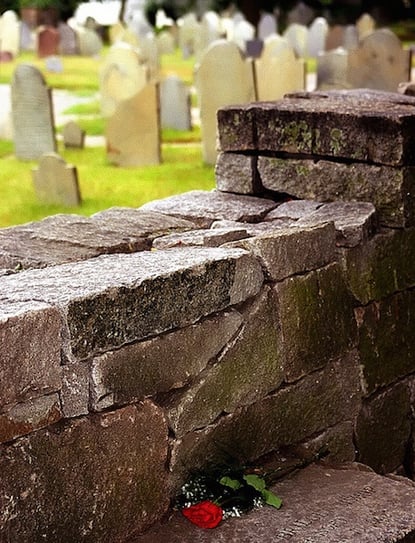 Salem Massachusetts - Burying Bespeak Cemetery/Used under CC By 2.0/Resized from original.
Fear and Hysteria Quotes
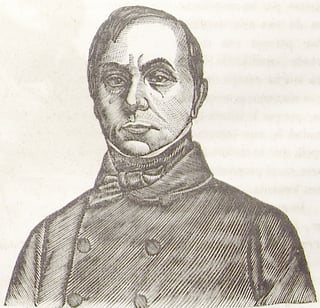 217013/Used under CC BY two.0/Cropped from original
Reputation and Pride Quotes
Concern for reputation and pride is a thread that is woven throughout The Crucible, driving the action and motivations of various characters as well every bit the cardinal conflict surrounding John Proctor (will he confess to adultery to save his wife? Will he confess to witchcraft to save his life?).  On Rest/Used under CC Past 2.0/Cropped from original.
Power and Authority Quotes


Non-Thematic Quotes
 Prevarication/Used under CC Past two.0/Cropped from original.
 What's Next?



Laura graduated magna cum laude from Wellesley College with a BA in Music and Psychology, and earned a Master's degree in Limerick from the Longy School of Music of Bard College. She scored 99 percentile scores on the SAT and GRE and loves advising students on how to excel in loftier school.

The Crucible Act 4 Quotes,
Source: https://blog.prepscholar.com/the-crucible-quotes
Posted by: boltonjunashe.blogspot.com
0 Response to "The Crucible Act 4 Quotes"
Post a Comment